38 force diagram worksheet
A Worksheet 2 Drawing Force Diagrams is many short questionnaires on a particular topic. A worksheet can there will be any subject. Topic could be a complete lesson in a unit or maybe a small sub-topic. Worksheet may be used for revising the subject for assessments, recapitulation, helping the students to recognize the subject more precisely or even improve the information throughout the matter. Some of the worksheets below are Force and Motion Worksheets in PDF, Lessons on Force and Motion, Balanced and Unbalanced Forces and Velocity and Acceleration with colorful diagrams. Basic Instructions. Once you find your worksheet(s), you can either click on the pop-out icon or download button to print or download your desired worksheet(s).
a) Draw a free body diagram showing all the forces acting on the textbook. b) From your diagram, what is the friction force that holds the text in place? c) The coefficient of static friction between book and surface is 0.190. Use this and your f.b. diagram to determine the minimum force needed to hold the textbook in place.
Force diagram worksheet
Worksheet #1 Free Body or Force diagrams Drawing Free-Body Diagrams Free-body diagrams are diagrams used to show the relative magnitude and direction of all forces acting upon an object in a given situation, A free-body diagram is a special example of the vector diagrams; these diagrams will be used throughout your study of physics. Free-body diagrams for four situations are shown below. For each situation, determine the net force acting upon the object. Free-body diagrams for four situations are shown below. The net force is known for each situation. However, the magnitudes of a few of the individual forces are not known. Activity: Forces and Force Diagrams. For this physical science activity, students draw force diagrams and identify the types and directions of forces illustrated in the printable.
Force diagram worksheet. 2 A. The forces shown above are PUSHING / PULLING forces. B. The forces shown above are WORKING TOGETHER / OPPOSITE FORCES. C. The forces are EQUAL / NOT EQUAL. D. The forces DO / DO NOT balance each other. E. The stronger force is pulling to the RIGHT / LEFT. F. The weaker force is pulling to the RIGHT / LEFT. G. Motion is to the RIGHT / LEFT. Circle the best answer on the line provided. Physics P Worksheet 4-4: Force Diagrams Worksheet 4-4 Force Diagrams In the space to the left of each diagram, draw a force diagram for block B; to the right, draw a Free-Body Diagrams Practice Package Free body diagrams (otherwise known as FBD's) are simplified representations of an object (the body) in a problem, and include force vectors acting on the object. This body is free because the diagram will show it without its surroundings; i.e. the body is 'free' of its environment. This Drawing Free-Body Diagrams. Free-body diagrams are diagrams used to show the relative magnitude and direction of all forces acting upon an object in a given situation. A free-body diagram is a special example of the vector diagrams that were discussed in an earlier unit. These diagrams will be used throughout our study of physics.
Free Body Diagrams Worksheet Name:_____ Physics. Free-body diagrams for four situations are shown below. For each situation, determine the net force acting upon the object. Free-body diagrams for four situations are shown below. The net force is known for each situation. However, the magnitudes of a few of the individual forces are not known. Force diagrams. There are several different situations which the pupils have to draw force diagrams for. I also asked the pupils to tell me whether the forces were balanced or unbalanced. Report this resource to let us know if it violates our terms and conditions. Our customer service team will review your report and will be in touch. Talking about Force Diagrams Worksheets with Answers, we already collected various variation of images to inform you more. 2 drawing force diagrams worksheet, free body diagram worksheet answers and free-body diagrams worksheet with answers are three main things we want to present to you based on the gallery title. Free-Body Diagrams Practice Package. Free body diagrams (otherwise known as FBD's) are simplified representations of an object (the . body) in a problem, and include force vectors acting on the object. This body is . free. because the diagram will show it without its surroundings; i.e. the body is 'free' of its environment.
Force Diagrams Worksheets For Year 6s you need a good reason to ask someone for assistance, check this list first: You lack experience in academic writing. You lack knowledge in Force Diagrams Worksheets For Year 6s the discussed subject. You lack time to write Force Diagrams Worksheets For Year 6s a good essay yourself. Worksheet 4-3 Statics For each of the problems below, carefully draw a force diagram of the system before attempting to solve the problem. 1. Determine the tension in each cable in case A and case B. Case A Case B 2. Determine tension in each cable. (Hint: There is more than one way to define the system.) 3. The cable at left exerts a -30 N ... The applied force is written as . F. A. In the problems for this course, this will be equal to the frictional force because we are overcoming that force to get the object to move at a steady pace. So, F. A = F. Fr. Try to label the four forces in the diagram to the below. Let's assume that the applied force is going to the . left. 18. $1.50. PDF. This is a worksheet to practice force diagrams (free body diagrams). The worksheet includes objects at rest, moving at constant velocities, and accelerating. The worksheet also includes situations with friction (both kinetic and static) and a set of situations where Newton's Third Law could be use.
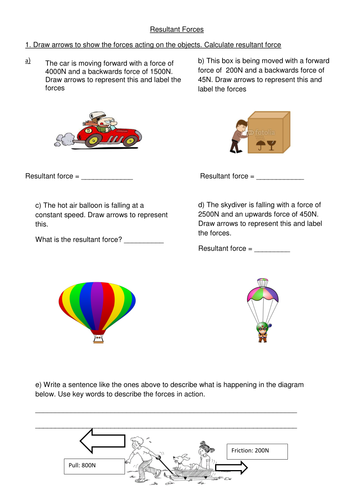
Resultant Force Worksheet Teaching Resources
KS3 Forces Worksheets topics and contents. This worksheet pack contains everything you need to assist every aspect of your students KS3 Forces learning. The topics covered in this worksheet pack are: Forces and their effects; Contact and non-contact forces; Force diagrams; Resistive forces; Calculating the mean; Using data to draw a graph
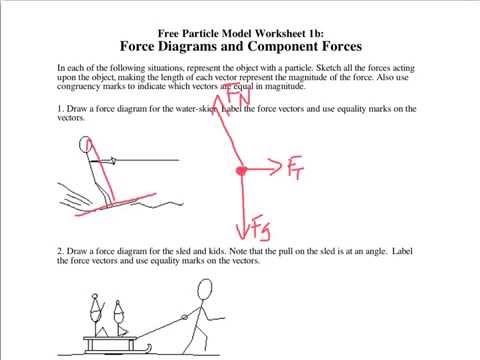
Net Force Diagrams Worksheet Jobs Ecityworks
Net Force Particle Model Worksheet 1: Force Diagrams and Net Force. 1. An elevator is moving up at a constant velocity of 2.5 m/s, as illustrated in the diagram below: The passenger has a mass of 85 kg. a. Construct a force diagram for the passenger. b. Calculate the force the floor exerts on the passenger.
Physics Online Portfolio Contact Force
Force diagrams choose the correct statement. balanced and unbalanced forces. Resultant force
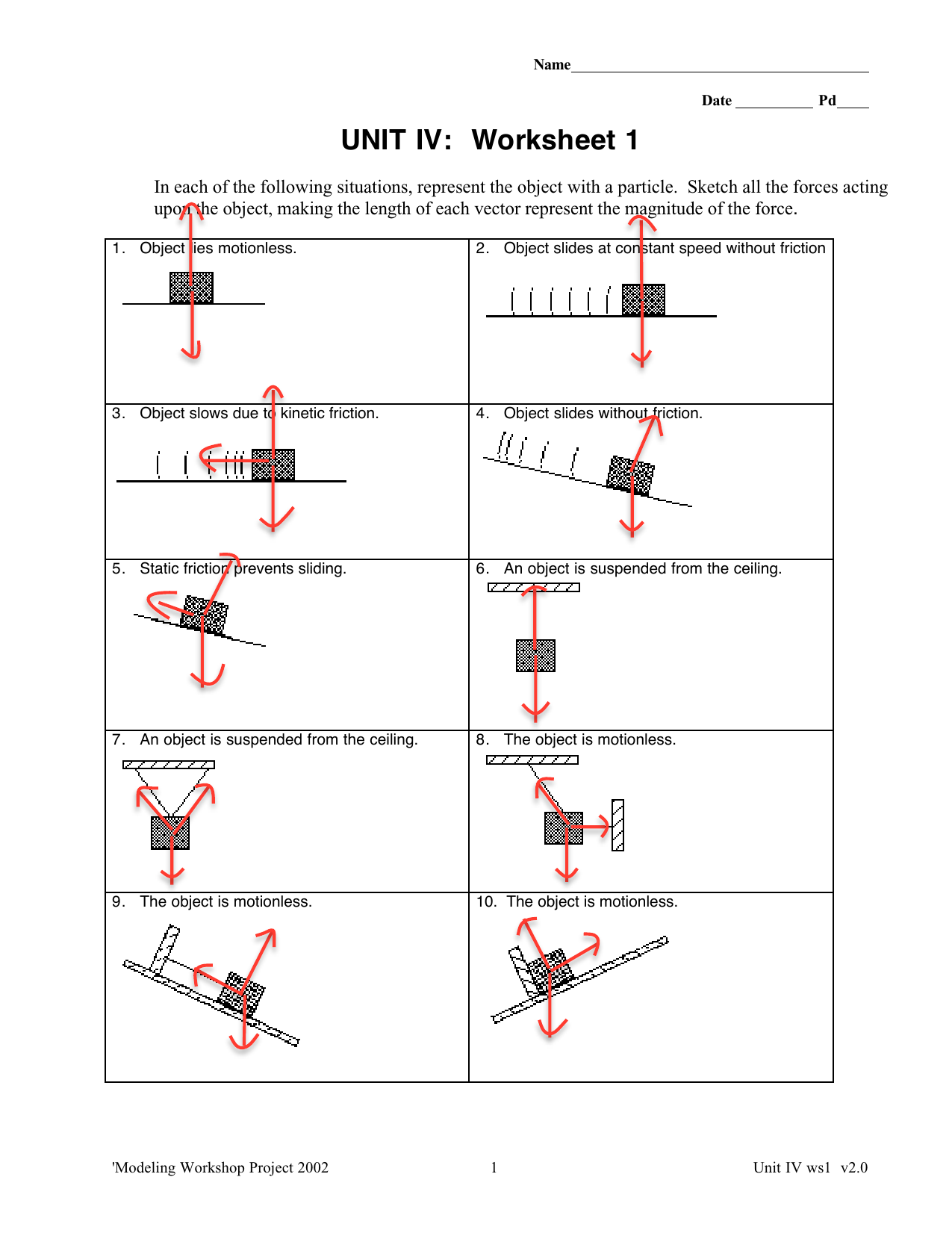
Free Body Diagram Worksheet Copy
Force Diagram Worksheet
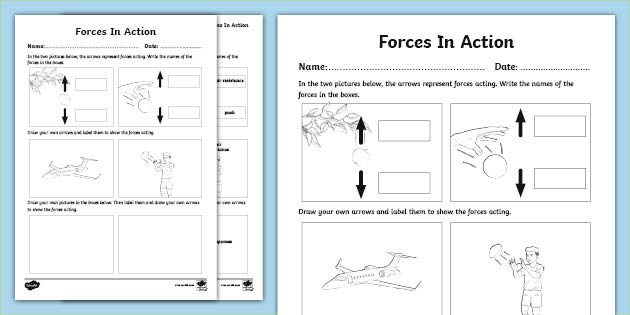
Forces In Action Worksheet
Free Body Diagrams Practice Problems Construct free-body diagrams for the various situations described below. Use the following forces. 1. A book is at rest on a table top. Diagram the forces acting on the book. 2. A girl is suspended motionless from a bar which hangs from the ceiling by two ropes. Diagram the forces acting on the girl. 3.
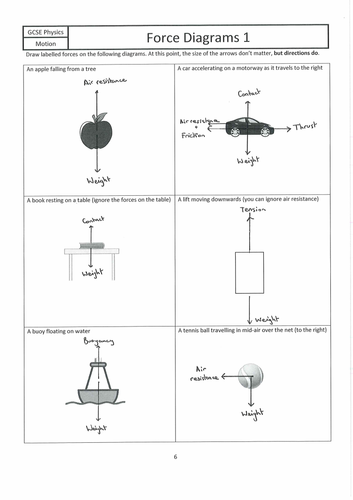
Labelling Force Diagrams Teaching Resources
Pages 1 and 2 give a brief summary of different types of forces and some of the terms that are often used in dynamics questions. The worksheets on pages 3 and 4 give practice in showing forces on diagrams. Possible answers are given below, but some forces such as air resistance

Free Body Diagram Worksheet Archer Jirasirikul S Portfolio
A worksheet for pupils to practice drawing force diagrams, for objects with different motion. Creative Commons "Sharealike" Reviews. 3.9. Something went wrong, please try again later. keerthidevapriya. a year ago. report. 4. Empty reply does not make any sense for the end user. Submit reply ...
2
Worksheet #1 Free Body or Force diagrams Drawing Free-Body Diagrams Free-body diagrams are diagrams used to show the relative magnitude and direction of all forces acting upon an object in a given situation, A free-body diagram is a special example of the vector
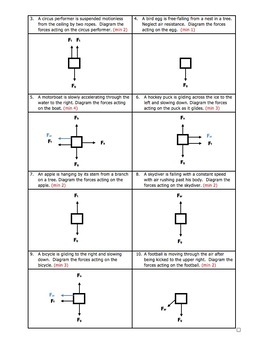
Worksheet Drawing Free Body Or Force Diagrams By Science With Mr Enns
Worksheet #1 Free Body or Force diagrams… Drawing Free-Body Diagrams . Free-body diagrams are diagrams used to show the relative magnitude and direction of all forces acting upon an object in a given situation. A free -body diagram is a special example of the vector diagrams; these diagrams will be used throughout your study of physics.

Introduction To Forces Force And Motion Force Can Be Calculated Using Newton S 2nd Law F Ma This Force And Motion Physics Lessons Physical Science Lessons
©Modeling Instruction 20103 1 U4 Freeparticle, ws1b v3.1 Name Date Pd Free Particle Model Worksheet: Force Diagrams and Component Forces In each of the following situations, represent the object with a particle. Sketch all the forces acting upon the object, making the length of each vector represent the magnitude of the force. Also use congruency marks to indicate which vectors are equal in ...
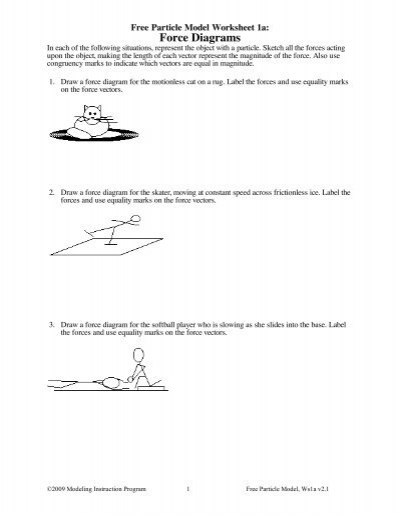
Worksheet 1a Modeling Physics
Activity: Forces and Force Diagrams. For this physical science activity, students draw force diagrams and identify the types and directions of forces illustrated in the printable.
2
Free-body diagrams for four situations are shown below. For each situation, determine the net force acting upon the object. Free-body diagrams for four situations are shown below. The net force is known for each situation. However, the magnitudes of a few of the individual forces are not known.
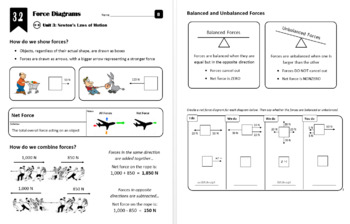
Lesson 3 2 Force Diagrams By Integrated Chemistry And Physics Full Curriculum
Worksheet #1 Free Body or Force diagrams Drawing Free-Body Diagrams Free-body diagrams are diagrams used to show the relative magnitude and direction of all forces acting upon an object in a given situation, A free-body diagram is a special example of the vector diagrams; these diagrams will be used throughout your study of physics.
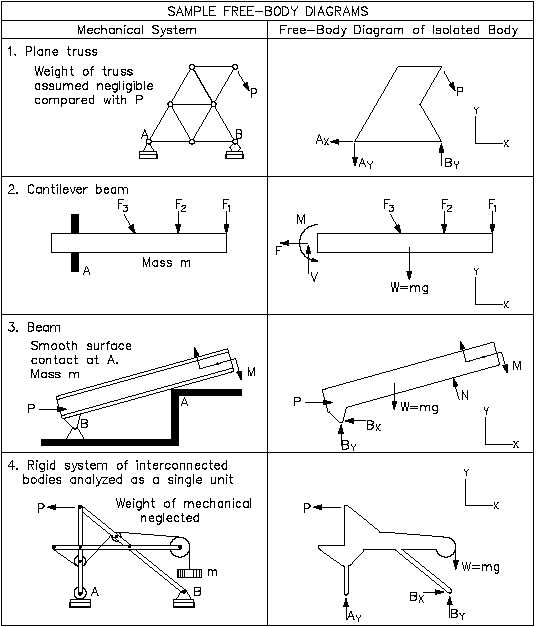
Figure 4 Various Free Body Diagrams

Physicslab Net F Ma
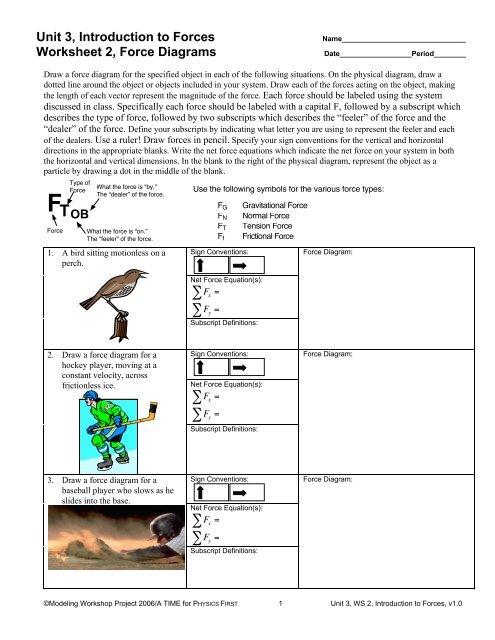
Worksheet 2 Force Diagrams

8 2 Effect Of Force Worksheet
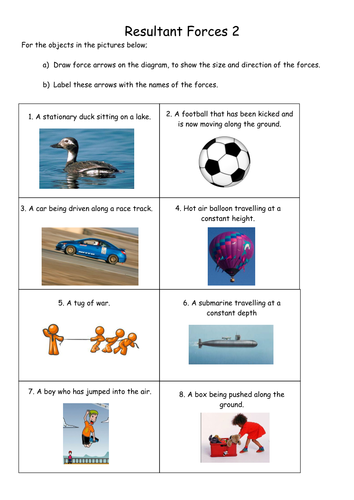
Force Diagrams Teaching Resources
2
2

Force Diagrams Worksheet

Worksheet 1 Free Body Or Force Diagrams Second Nbsp Worksheet 1 Free Body Or Force Diagrams Pdf Document
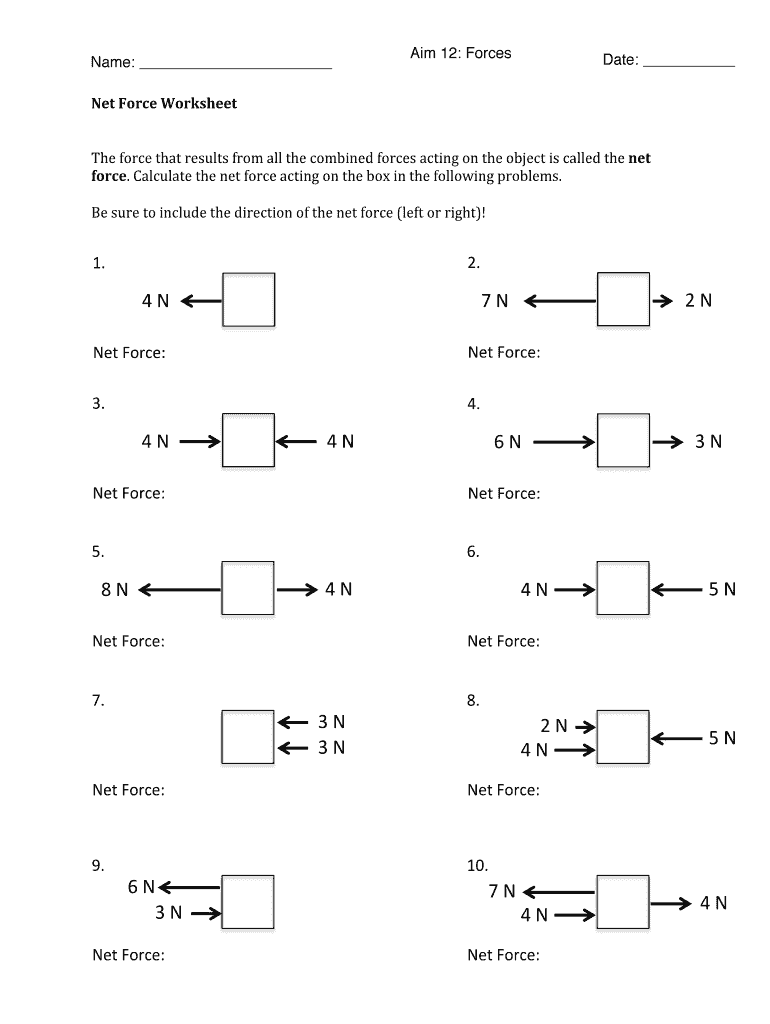
Net Force Worksheet Fill Online Printable Fillable Blank Pdffiller
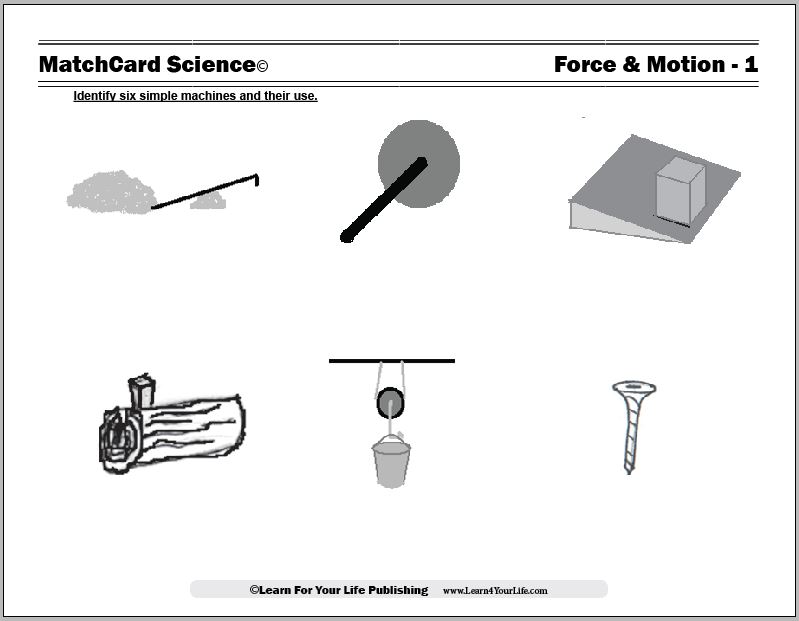
Force And Motion Worksheets

Free Body Diagram Net Force Practice Worksheet Body Diagram Practices Worksheets Worksheets
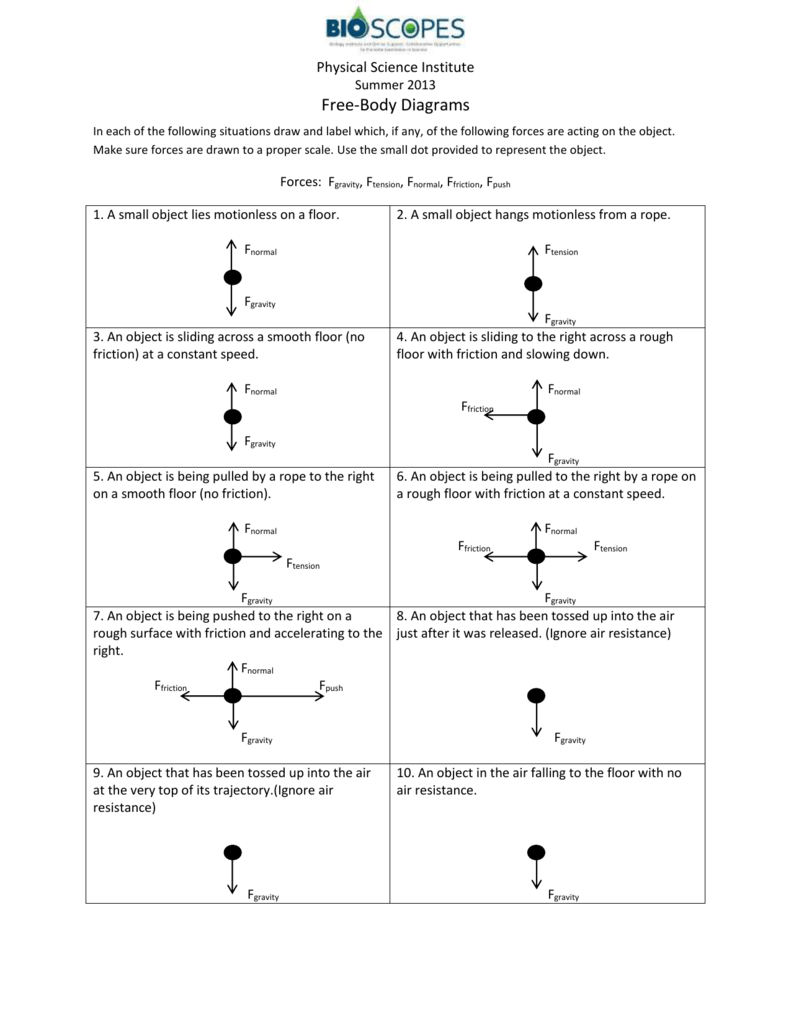
Free Body Diagrams Worksheet Answer Key

Pdf Drawing And Using Free Body Diagrams Why It May Be Better Not To Decompose Forces

Net Force Worksheet Crjh 8th Grade Science Licensed Force Net Force Worksheet Balanced Forces Unbalanced Forces 2 For Each Of Diagram 8 N 10 N D 10 N Net Force Change Pdf Document

Pdf Drawing And Using Free Body Diagrams Why It May Be Better Not To Decompose Forces

What Is Free Body Diagram Definition With Examples Riansclub
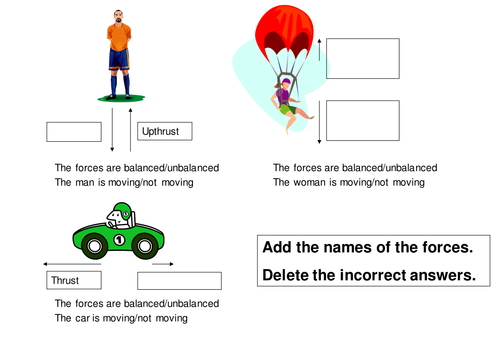
Force Diagrams Teaching Resources
2
2

Force Diagrams Worksheet Youtube
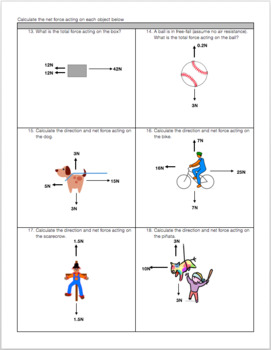
Free Body Diagram Net Force Practice Worksheet Tpt
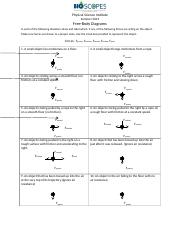
In Each Of The Following Situations Draw And Label Which If Any Of The Following Forces Are Acting On The Object Make Sure Forces Are Drawn To A Course Hero
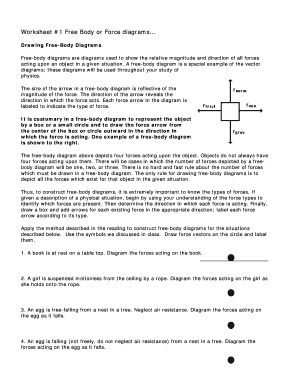
Body Diagrams Worksheet Fill Online Printable Fillable Blank Pdffiller
2
Comments
Post a Comment