39 ohms law diagram
11.2 Ohm's Law | Electric circuits | Siyavula 11.2 Ohm's Law (ESBQ6) Interactive Exercise 11.2. Try the interactive questions. Three quantities which are fundamental to electric circuits are current, voltage (potential difference) and resistance. To recap: Electrical current, I, is defined as the rate of flow of charge through a circuit. Potential difference or voltage, V, is the amount of ... PDF Ohm 's Law - Oakton Community College 3-1—3-3: Ohm 's Law Formulas There are three forms of Ohm's Law: I = V/R V = IR R = V/I where: I = Current V = Voltage R = Resistance Fig. 3-4: A circle diagram to help in memorizing the Ohm's Law formulas V = IR, I = V/R , and R= V/I . The V is always at the top.
Ohm's law - Wikipedia Ohm's law states that the current through a conductor between two points is directly proportional to the voltage across the two points. Introducing the constant of proportionality, the resistance, one arrives at the usual mathematical equation that describes this relationship:
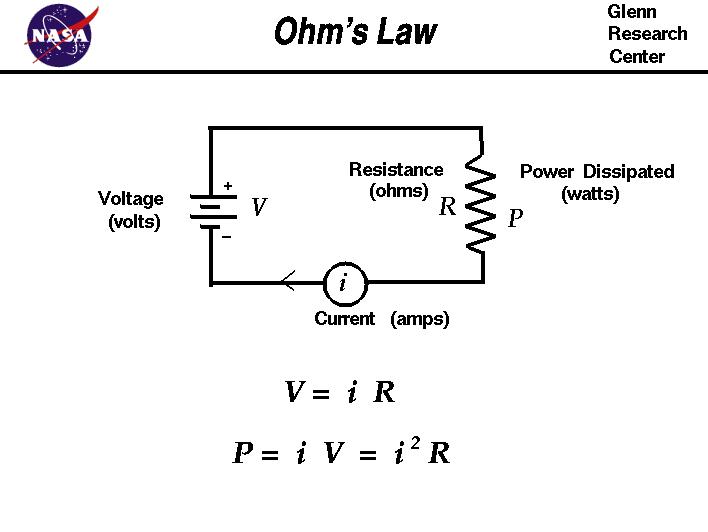
Ohms law diagram
What is Ohm's Law? | Fluke Ohm's Law can be used to validate the static values of circuit components, current levels, voltage supplies, and voltage drops. If, for example, a test instrument detects a higher than normal current measurement, it could mean that resistance has decreased or that voltage has increased, causing a high-voltage situation. Ohm's Law - olypen.com The diagrams below are simplified illustrations to show the algebraic equivalent of three possible equations each. Using the diagram on the left as an example, you have the following possibilities: E = I x R I = E ÷ R R = E ÷ I. You can use the Ohm's Law calculator to figure any unknown value as long as you have two known values to work with. Ohm's law: Formula, Graph and 3 Easy Examples Ohm's law as a graph Here you will learn how to identify Ohm's law in a current-voltage diagram. Ohm's law as a formula Here you will learn about the famous URI formula, how you can remember it easily and how it comes about. Electrical resistance Here you will learn what the unit of electrical resistance is and what it has to do with conductors.
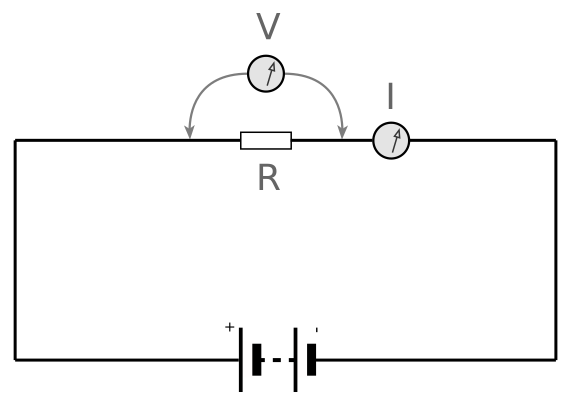
Ohms law diagram. State Ohm's Law With Diagram - U Wiring The circuit diagram to verify ohms law is drawn below. Where V is the voltage I is the current and R is the resistance. V I R. State ohms law and labelled diagram to verify. Ohms law states that Current through a conductor is directly proportional to voltage difference across it. R 220 Ω. state ohms law with diagram - Wiring Diagram and Schematics state ohm s law and represent it mathematically draw the pattern of graph potential difference brainly in a labelled circuit diagram to verify this laboratory v i for same explain how would you use determine suggest an activity demonstrate by drawing versus snapsolve with elish relationship between across two ends resistor cur flowing through … Ohms Law Circuit Diagram - U Wiring Ohms law circuit diagram. We can use Ohms Law to calculate the voltage drop across the known resistors. Mathematically this current-voltage relationship is written as In the equation the constant of proportionality R is Resistance and has units. The circuit diagram to verify ohms law is drawn below. Circuit Diagrams See symbols on page 262. How to use ohms law What is Ohm's law with diagram? Ohm's law states that Current through a conductor is directly proportional to voltage difference across it. where V is the voltage, I is the current and R is the resistance. The circuit diagram to verify ohm's law is drawn below. Voltmeter across a resistor is connected in parallel.
Ohms Law and Circuit Diagrams | Physics Quiz - Quizizz Q. Calculate the Resistance value in a closed circuit supplied with 110V and power consumed in the circuit is 100 watts: answer choices. 121 ohms. 1.1 ohms. 60.5 ohms. 11 ohms. 121 ohms. alternatives. PDF HVAC Electrical Wiring Diagrams / Ohm's Law / Sequence of ... HVAC Electrical - Wiring Diagrams / Ohm's Law / Sequence of Operation RV 6.8.20 4 Hints in solving the following problems Step 1 - Determine to total resistance in Ohm from the following Resistance formulas. Step 2. Determine I (amps) = E (volts) / R (Resistance in Ohms) Step 3. Determine Power (watts) = Amps x Volts Step 4. Ohm's Law - Statement, Formula, Solved Examples ... Ohm's Law Equation: V = IR, where V is the voltage across the conductor, I is the current flowing through the conductor and R is the resistance provided by the conductor to the flow of current. Relationship Between Voltage, Current and Resistance Draw a circuit diagram to verify ohm's law - Toppr Ask Ohm's law states that Current through a conductor is directly proportional to voltage difference across it. IαV ⇒V = I R where V is the voltage, I is the current and R is the resistance. The circuit diagram to verify ohm's law is drawn below. Voltmeter across a resistor is connected in parallel.
State Ohm's law. Draw a labelled circuit diagram to verify ... Solution Ohm's law states that the electric current flowing through a conductor is directly proportional to the potential difference across its two ends, when other physical conditions like temperature remains constant. V ∞I or V I = Constant = R or V =IR Thus, the ratio V : I is a constant. This constant called the resistance (R) of the conductor. NCERT Class 10 Science Lab Manual - Ohm's Law - CBSE Tuts Circuit Diagram: In a circuit ammeter is always connected in series and voltmeter is connected in parallel across the points between which potential difference is to be measured. A straight line graph obtained between V and I verifies the Ohm's law. Ohm's Law: Diagram, Equation & Experiment - StudiousGuy This is known as Ohm's Law and represented as; In the above equation, R is a constant, and it is referred to as resistance. For a given metallic wire, R is constant at a given temperature. According to Ohm's law, R=V/I. Also, as per the Ohm's law, the current flowing through a conductor is inversely proportional to the resistance of the ... Verification of Ohm's Law experiment with data and graph ... Fig. (1) gives the circuit diagram for the verification of Ohm's Law lab experiment. Circuit Diagram for Ohm's Law Experiment Here, R is the resistance of the wire, A is the ammeter, V is the Voltmeter, Rh is the rheostat and K is a key. Arrow sign indicates the direction of current flow in the circuit. Formula used for the Ohm's law lab experiment
Ohm's Law
Ohm's Law Circuit Diagram Sliding Puzzle: ProProfs Ohm's Law Circuit Diagram Sliding Puzzle Games - You must have read about Ohm's law and its circuit diagram in your Physics textbook. Its circuit diagram consists of an ammeter, voltmeter, and a variable resistor. Do you think you are ready to take this challenge of sliding puzzle to make a perfect circuit diagram of Ohm's law? If so, try your luck and test your knowledge.
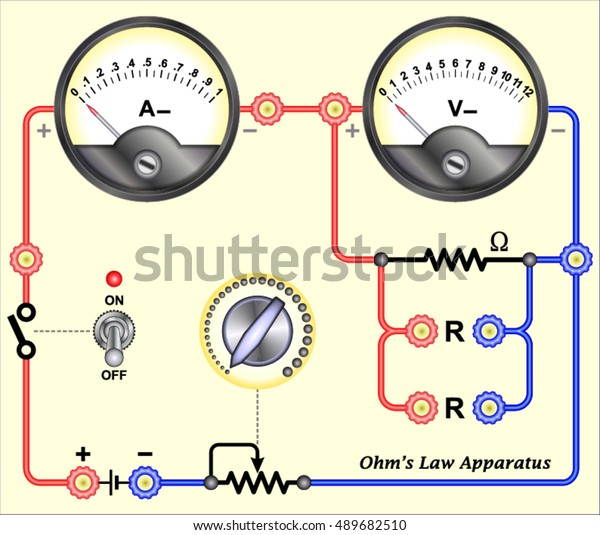
Ohms Law Apparatus Stock Vector (Royalty Free) 489682510
Ohms Law Calculator Ohm's Law states that the current through a conductor between two points is directly proportional to the voltage. This is true for many materials, over a wide range of voltages and currents, and the resistance and conductance of electronic components made from these materials remain constant.

File:Ohms Law graph.png - Wikimedia Commons
Ohms Law Calculator Simple to use Ohm's Law Calculator. Calculate Power, Current, Voltage or Resistance. Just enter 2 known values and the calculator will solve for the others.

Ohm's Law, Ohm's Law Pie Chart
Quick Answer: What Is Ohms Law Diagram - SeniorCare2Share What is Ohm's law class 10 diagram? OHM's law states that under no same temperature, electric current flowing through an ideal conductor is directly proportional to the potential difference across its ends. Resistance is a property of conductor to resist flow of charge through it. Its SI unit is Ohm (Ω). What is Ohm's law explain with example?
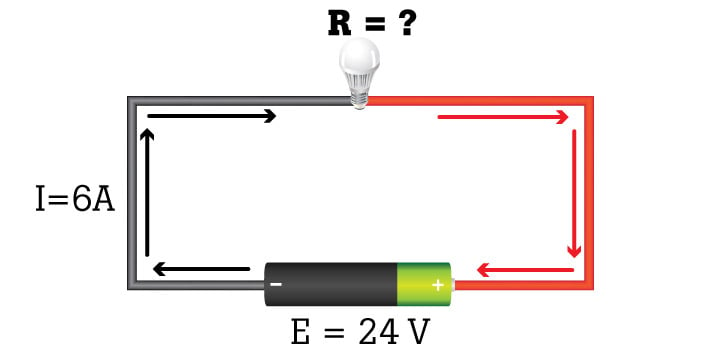
What is Ohm's Law? | Fluke
Ohms Law Class 10: Derivation, Circuit Diagram, V-I Graph ... Ohm's Law Graph or V-I graph for resistance R Relation between voltage and current for ohmic resistance:- A variable battery is connected to a resistive wire (R) and a key as shown in the image above. An ammeter is connected in series with the resistance. While a voltmeter is connected in parallel with resistance.

Quick Answer: What Is Ohms Law Diagram - SeniorCare2Share
Ohm's Law, Ohm's Law Pie Chart - the12volt.com Ohm's Law Pie Chart. ... Please verify all wire colors and diagrams before applying any information. We are a participant in the Amazon Services LLC Associates Program, an affiliate advertising program designed to provide a means for us to earn fees by linking to Amazon.com and affiliated sites. Top ...

Ohm's law - Wikipedia
Ohm's Law - Heat and Sensor Technology Ohm's Law Diagram Click the image for an Ohms Calculator Ohm's law is named after the German physicist Georg Ohm. Georg published his work in 1827. Georg's proven work states that a current moving through a conductor and between two points, is directly proportional to the potential difference spanning across the two points.

Ohm's law: Formula, Graph and 3 Easy Examples
Ohm's law circuit diagram [How to Read Symbols] - Ohm Law Ohm's law circuit diagram [How to Read Symbols] The simple Ohm's Law Circuit Diagram comprises a resistance connected in series with a DC voltage source. Two parallel lines having one with comparatively larger length represents the DC Source and a Zig-Zag symbol represents the resistor. Whereas the simple lines are used to represent the wires.
![Solved] draw the circuit diagram used to Verify Ohm's law ...](https://hi-static.z-dn.net/files/d1e/8eb18335b44d0e9edd3de9a22d930660.png)
Solved] draw the circuit diagram used to Verify Ohm's law ...
Ohm's Law for beginners and novices - University of South ... Using the diagram on the left, Ohms Law is defined as; "Provided that the temperature remains constant, the ratio of potential difference (p.d.) across the ends of a conductor (R) to the current (I) flowing in that conductor will also be constant".
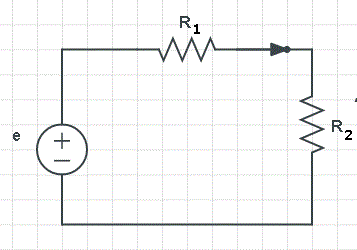
Ohm's Law with Examples
Ohm's Law - Definition, Formula, Applications of Ohm's Law ... Ohm's law states that the current through a conductor between two points is directly proportional to the voltage across the two points. Ohm's Law Formula Voltage= Current× Resistance V= I×R V= voltage, I= current and R= resistance The SI unit of resistance is ohms and is denoted by Ω This law is one of the most basic laws of electricity.

Draw a circuit diagram to verify ohm's law .
Ohm's Law - Ohm Law Mathematically Ohm's Law is given by V = IR Where V = Voltage, I = Current, R = Resistance Ohm's Law is widely used in Electrical Engineering for solving circuits. A circuit is the combination of voltage source and resistors forming a closed loop (Like the one shown above). The Ohm's law statement is experimentally derived statement.
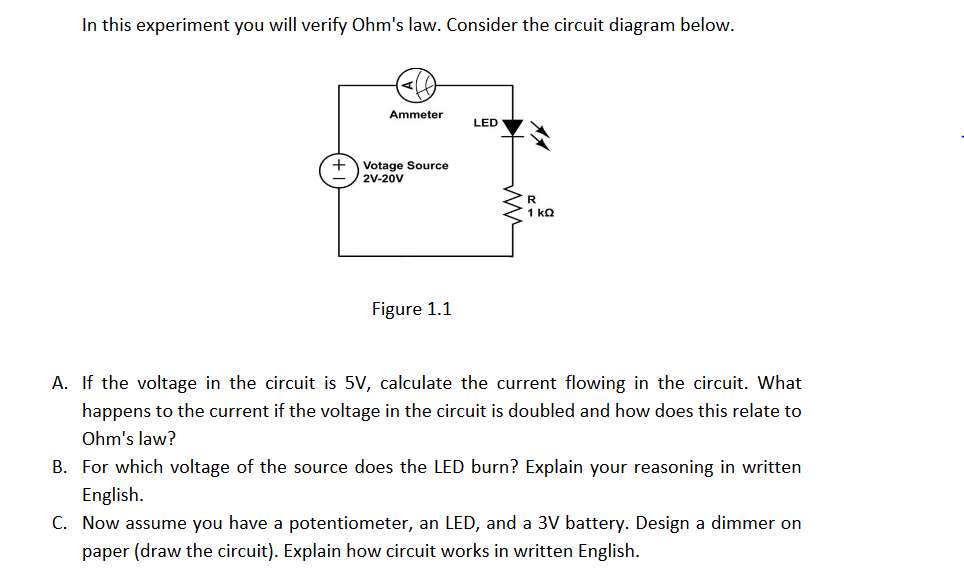
Solved In this experiment you will verify Ohm's law. | Chegg.com
Ohm's law: Formula, Graph and 3 Easy Examples Ohm's law as a graph Here you will learn how to identify Ohm's law in a current-voltage diagram. Ohm's law as a formula Here you will learn about the famous URI formula, how you can remember it easily and how it comes about. Electrical resistance Here you will learn what the unit of electrical resistance is and what it has to do with conductors.
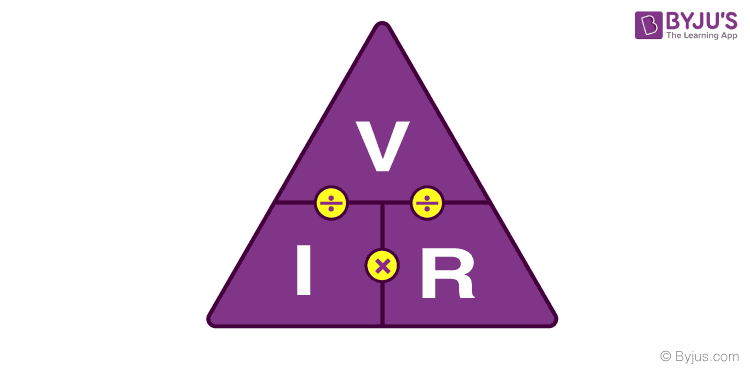
Ohm's Law - Statement, Formula, Solved Examples, Verification ...
Ohm's Law - olypen.com The diagrams below are simplified illustrations to show the algebraic equivalent of three possible equations each. Using the diagram on the left as an example, you have the following possibilities: E = I x R I = E ÷ R R = E ÷ I. You can use the Ohm's Law calculator to figure any unknown value as long as you have two known values to work with.

11.2 Ohm's Law | Electric circuits | Siyavula
What is Ohm's Law? | Fluke Ohm's Law can be used to validate the static values of circuit components, current levels, voltage supplies, and voltage drops. If, for example, a test instrument detects a higher than normal current measurement, it could mean that resistance has decreased or that voltage has increased, causing a high-voltage situation.
What is Ohm's law in electrical engineering? - Quora
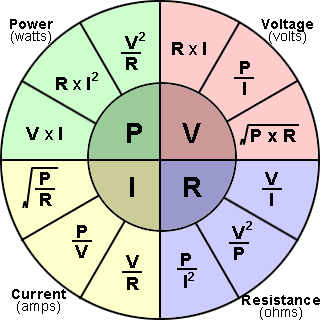
Ohms Law Calculator

How To Draw Circuit To Verify Ohm's Law In The Laboratory Diagram
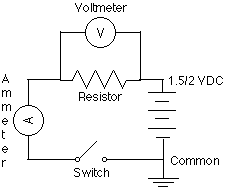
Physics Experiment - Ohm's Law
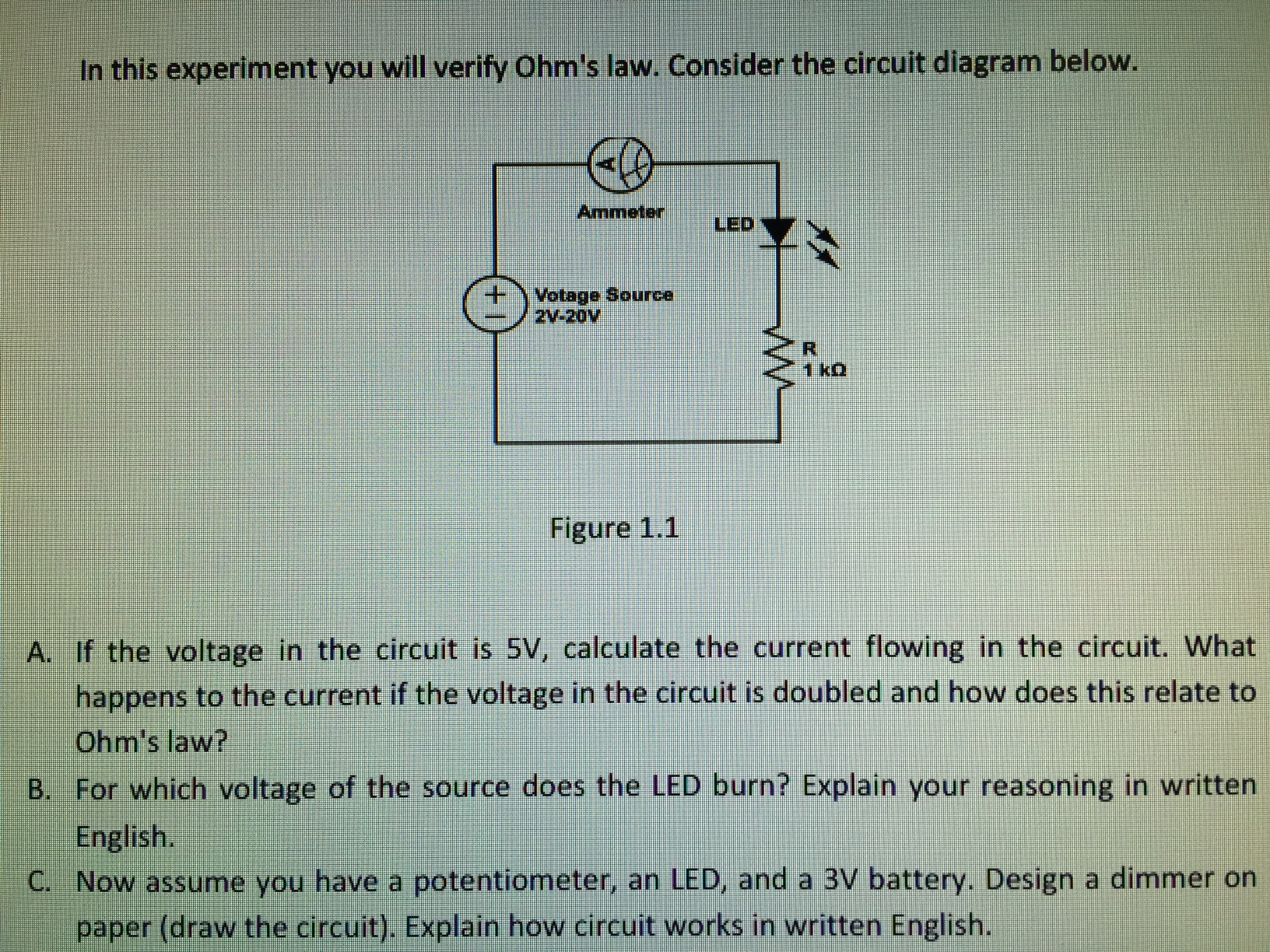
Solved In this experiment you will verify Ohm's law. | Chegg.com

Why V=IR is not Ohm's Law, and why that matters - Science by ...
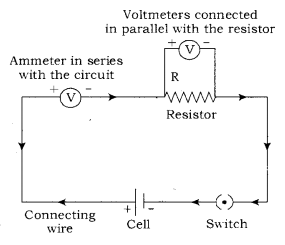
a) State Ohm's Law - CBSE Class 10 Science - Learn CBSE Forum

66 Ohm Is Law Stock Photos, Pictures & Royalty-Free Images ...
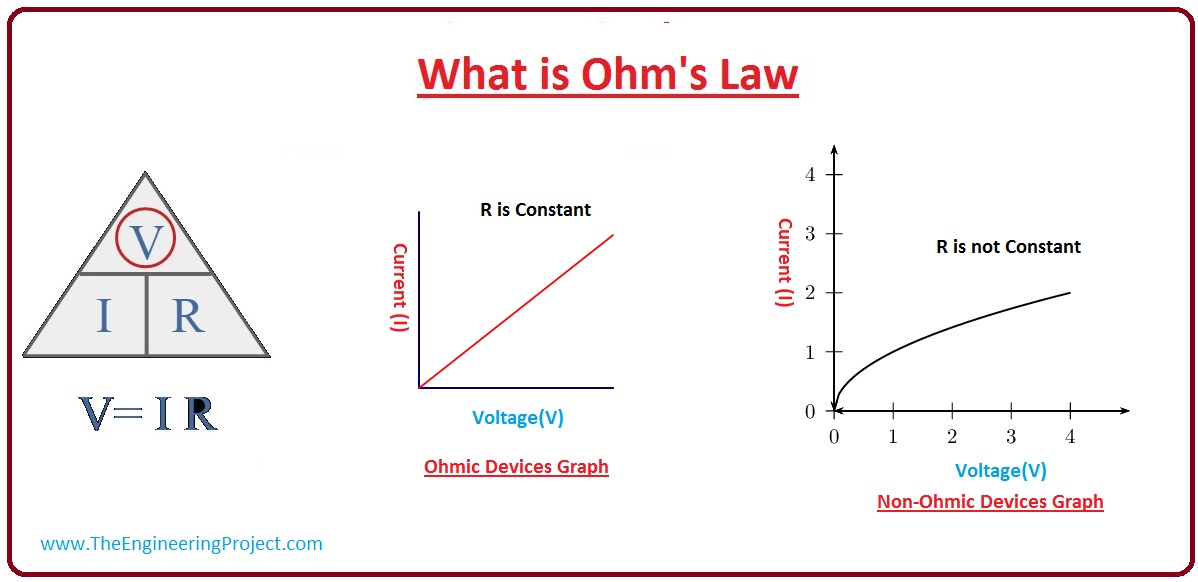
What is Ohm's Law - The Engineering Projects

Ohm's Law Animation - Ohm Law - Ohm's Law Simulation - Ohm's Law Formula and Definition - PhET Sim
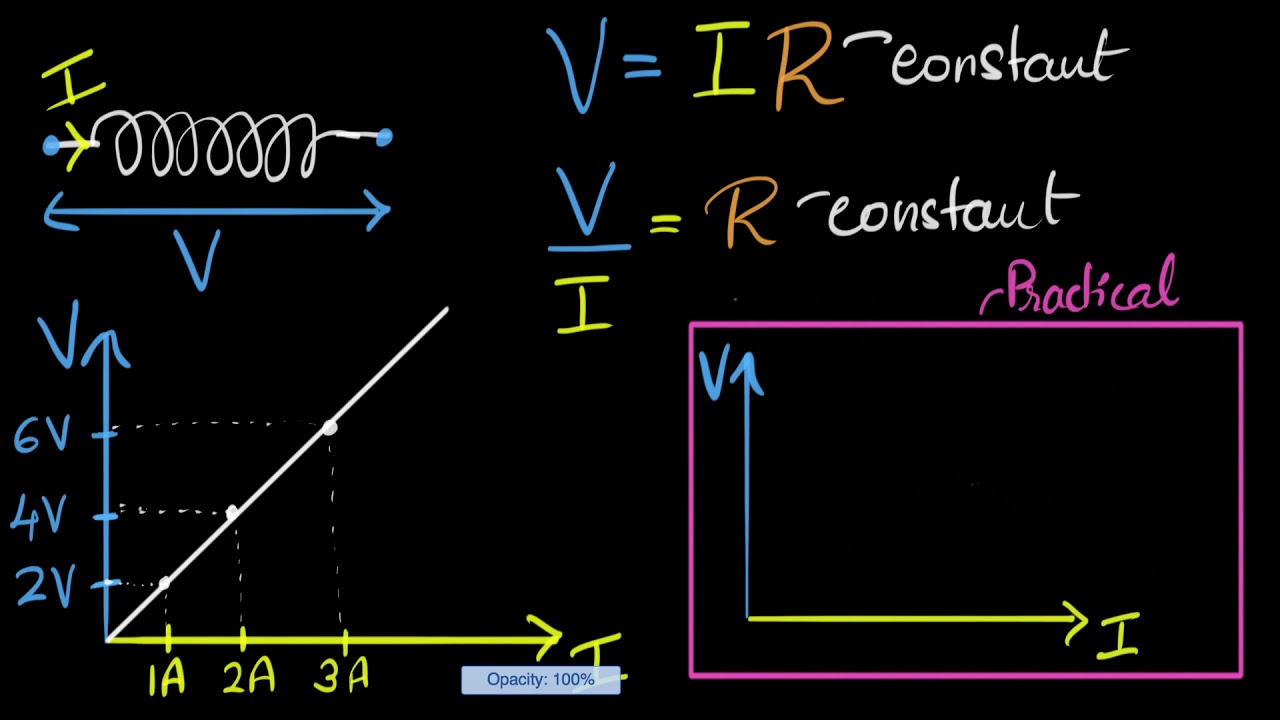
Ohm's law graph (verifying Ohm's law)

Ohm's Law: Diagram, Equation & Experiment – StudiousGuy

Ohms Law Tutorial and Power in Electrical Circuits
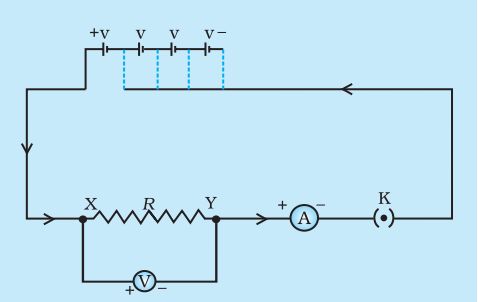
Ohm's Law: Diagram, Equation & Experiment – StudiousGuy
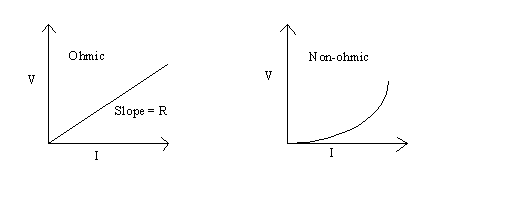
OHM'S LAW and RESISTANCE Name:
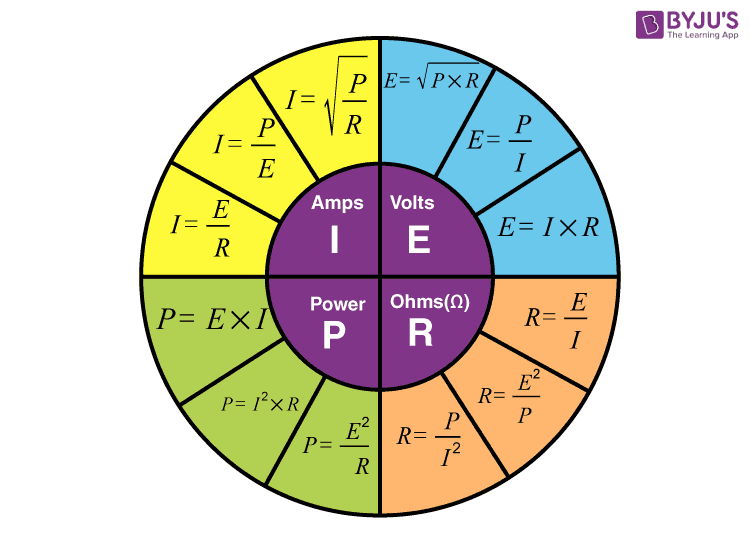
Ohm's Law - Statement, Formula, Solved Examples, Verification ...

Ohm's Law Lab Report [With Graph, Observations and ...

Example 5 State-dependent Ohm's Law and its associated state ...

11.2 Ohm's Law | Electric circuits | Siyavula
Ohm's Law - Web Formulas

In an experiment ohm's law a student obtained a graph as ...
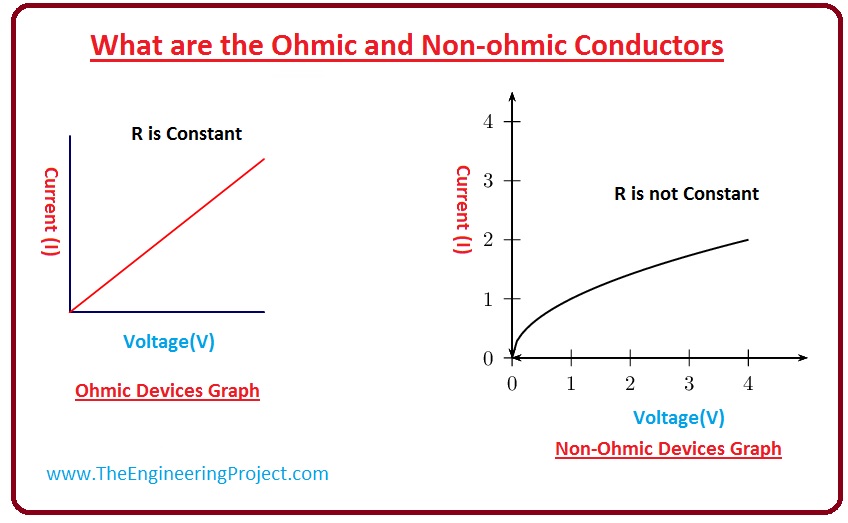
What is Ohm's Law - The Engineering Projects
What is Ohms Law - formula equation » Electronics Notes

Ohm's Law Chart | Electrical Engineering Blog | Electrical ...

State Ohm's law. Draw a circuit diagram to establish a ...


Comments
Post a Comment